Trending
Crochet Plush Frog Pattern – CabinInTheWoodsFR
Sometimes the best crochet projects are the ones that make you smile the moment you finish them. This plush frog pattern from CabinInTheWoodsFR is exactly that kind of project — a chubby, cheerful little amphibian that works up fast and looks adorable sitting on a shelf, tucked into a child’s hands, or peeking out of…
crochet · · 7 min read
Sometimes the best crochet projects are the ones that make you smile the moment you finish them. This plush frog pattern from CabinInTheWoodsFR is exactly that kind of project — a chubby, cheerful little amphibian that works up fast and looks adorable sitting on a shelf, tucked into a child’s hands, or peeking out of a gift bag. And the best part? It’s beginner-friendly without being boring.
I’ve made a few of these now, and every single time, the same thing happens: someone sees it, their face lights up, and they ask if I can make them one. That’s the mark of a good pattern. So let’s walk through what makes this frog special, how the pattern works, and why it deserves a spot in your queue.
Why This Frog Works
The first thing you notice is the shape. This isn’t a lanky, long-limbed frog. It’s round and squat, with a body that’s almost perfectly spherical. The legs are short and stubby. The eyes bulge just the right amount. It’s got personality without being complicated.
The designer kept things simple in the best way. The body is worked in continuous rounds, which means no visible seam running down the side. That gives the frog a smooth, polished look that feels more professional than a typical beginner amigurumi. The color changes are minimal — just the body, the eyes, and maybe a little belly detail if you want it. You can finish the whole thing in a weekend, maybe even an evening if you’ve got the yarn and a few hours to yourself.
What You’ll Need
The pattern calls for worsted weight yarn, which is a good choice. Worsted works up quickly, holds its shape well, and comes in every color you could possibly want. For a classic frog, you’re looking at a bright or forest green for the body, white for the eyes, and black for the pupils. But honestly? This pattern begs for experimentation.
I’ve seen versions in lime green, mint, even a deep teal that looked almost like a tree frog. One friend made hers in pastel pink and called it a “strawberry frog.” Nobody argued. The pattern is sturdy enough that you can swap colors freely without worrying about the construction falling apart.
You’ll need a 3.5mm or 4mm hook, depending on how tight you crochet. Safety eyes in 10mm or 12mm work well. Stuffing, a yarn needle, and stitch markers are the rest of the essentials. Nothing fancy. The pattern itself is written in standard US crochet terms and includes both written instructions and a photo of the finished piece for reference.
The Construction
The frog is built from the bottom up, starting with the legs. You make two separate legs, and here’s where the pattern does something smart: you don’t sew them on later. Instead, you join them as you go. That means the legs are attached during the body rounds, which gives you a stronger connection and less finishing work at the end. No fiddly sewing, no awkward positioning. It just works.
After the legs, you continue up into the body. This is where the magic happens. The increases are spaced out so the body forms a nice, even sphere. The designer included a few extra rounds of straight single crochet in the middle, which gives the body height without making it look stretched. Then the decreases start, and you stuff as you go.
The eyes are worked separately and sewn on at the end. They’re simple spheres, but the pattern includes a trick: you flatten the back slightly before attaching, so the eyes sit flush against the head instead of sticking out at weird angles. That small detail makes a huge difference in the final look.
If you want to add arms, those are quick tubes. The pattern gives you the option to include them or leave them off. I prefer them on — they make the frog look more expressive, especially if you pose them slightly differently on each side.
Where the Pattern Shines
What I appreciate most about this pattern is how forgiving it is. If your tension varies a little between the legs, nobody will notice. If your stuffing is a bit lumpy, the round shape hides it. The frog is designed to look cute even when it’s not perfect. That’s rare in amigurumi, where a wonky stitch can sometimes ruin the whole effect.
The pattern also scales well. I’ve seen people use bulky yarn and a bigger hook to make a giant frog pillow. I’ve seen others use sport weight and a tiny hook to make a keychain version. The proportions hold up either way. If you’re the type who likes to adapt patterns, this one gives you room to play.
What Could Trip You Up
No pattern is perfect, and this one has a couple of spots where beginners might get tripped up. The leg joining round, for example, requires a little attention. You’re working across both legs in a single round, and it’s easy to lose track of where you are if you’re not using stitch markers. I’d recommend marking the first stitch of each round until you’re past the join.
The eye placement is another area where you’ll want to take your time. The pattern tells you where to position them, but every frog ends up a little different depending on your tension and stuffing. Pin them in place first with stitch markers or spare pieces of yarn. Step back, look at the face from a few angles, and move them around until you’re happy. Once you sew them on, they’re not coming off without a fight.
Why You Should Make One
There’s a reason frog patterns are so popular in the crochet community. Frogs are inherently charming. They’re goofy and lovable and they don’t take themselves too seriously. This pattern captures that spirit perfectly.
It also makes a great gift. Kids love them, sure, but so do adults. I gave one to a coworker who keeps it on her desk, and she says it makes her smile every time she looks at it. That’s the kind of project worth spending your yarn on.
If you’re new to amigurumi, this pattern is a solid choice. It teaches you the basics — working in the round, increasing and decreasing, joining pieces — without overwhelming you with complex shaping. If you’re experienced, it’s a quick, satisfying make that lets you experiment with colors and yarn weights.
And if you’re looking for more quick projects to use up scraps or practice your skills, you might enjoy patterns like the Monster Keychain or the Baby Crabs. Both are small, fast, and perfect for using up leftover yarn from bigger projects.
Finishing Touches
Once your frog is assembled, take a minute to shape it. Fluff the stuffing, adjust the arms, make sure the eyes are level. If the frog wobbles when you set it down, you might need a little more stuffing in the base. If it looks lopsided, a gentle squeeze can redistribute the fiberfill.
You can add details if you want — a little pink tongue, a tiny flower on the head, maybe a bow tie. The pattern is plain enough that embellishments stand out nicely. But honestly, the frog is plenty cute on its own. Sometimes the simplest version is the best one.
This pattern from CabinInTheWoodsFR is one of those rare finds that delivers exactly what it promises: a cute, well-made frog that you’ll enjoy both making and giving. It’s not flashy. It’s not complex. It’s just good, solid crochet design. And sometimes that’s exactly what you need.
Keep reading
Trending
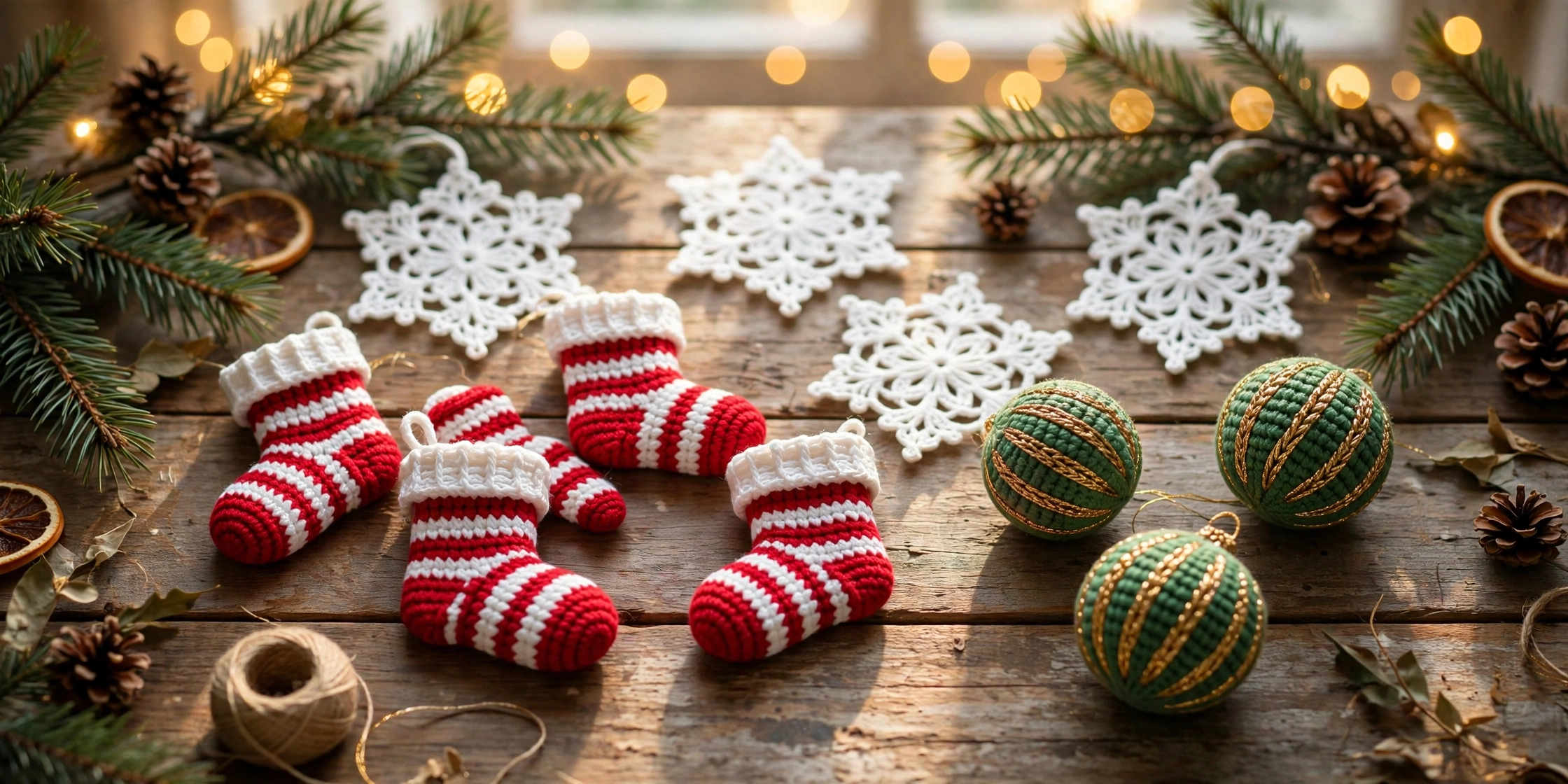
15 Crochet Christmas Ornament Patterns to Make Your Tree Sparkle (2026)
Why Crochet Christmas Ornaments? Store-bought ornaments are fine, but nothing beats the charm of a handmade tree. Crochet Christmas ornaments are quick to make, use up leftover yarn, and become keepsakes your family will hang for years. Each stitch carries a little warmth — and unlike plastic baubles, a crocheted snowflake never shatters when the…
· 6 min read
Trending
Starting with a Magic Ring: Crocheting Your First Amigurumi
There’s something about a ball of yarn and a single hook that feels like pure potential. You can make anything — a scarf, a blanket, a tiny monster keychain, even a little creature that fits in the palm of your hand. That last one is amigurumi, the Japanese art of crocheting small, stuffed yarn figures,…
· 8 min read
Trending
Double Stitch Crochet: A Complete Walkthrough for Beginners
There’s something deeply satisfying about watching a simple strand of yarn turn into something structured, soft, and useful. If you’ve been trying to figure out how to work double stitches consistently, you’re in the right place. This walkthrough breaks down the process step by step, with the kind of detail that actually helps you see…
· 6 min read