A woman in Los Angeles bought a lumpy, uneven crochet blanket at a flea market for $200. It wasn’t perfect — the stitches were inconsistent, some rows tighter than others, the whole thing slightly misshapen — but she threw it over her couch anyway. Within a week, people were asking where she got it. That imperfect blanket became the most complimented thing in her entire living room.
That story tells you almost everything you need to know about crochet home decor right now. It’s not about flawless execution or complex patterns. It’s about understanding a few small things that make a piece feel intentional and special instead of sloppy. If you’ve ever scrolled through crochet pages and felt like your own projects don’t quite measure up, stick around. We’re about to break down what actually separates a piece that looks handmade in the best way from one that looks a little off.
Why Most Crochet Home Decor Falls Flat (and How to Fix It)
Crochet has completely changed in the last few years. It used to be something people thought of as an old-fashioned hobby, something your grandmother did while watching TV. Now it’s all over social media — wall art, blankets that sell for hundreds of dollars, plant hangers, baskets, curtains, even lampshades. It’s not just a hobby anymore; it’s a whole design aesthetic.
But here’s the problem a lot of people run into. You start a project with big plans. You picture a gorgeous blanket or a perfect little basket sitting on your shelf. Then halfway through, it just looks wrong. The tension is uneven. The colors don’t blend the way you imagined. The shape doesn’t sit right. And that’s when most people give up, convinced crochet home decor just isn’t for them.
Here’s the truth: it’s almost never about talent. It’s about not knowing a few key principles that separate a piece that looks beautifully handmade from one that looks messy. Once you know these, everything gets easier.
The first thing that changes everything is yarn choice. Beginners tend to grab whatever yarn is cheap or whatever color catches their eye, without thinking about texture or weight. But the yarn you pick basically decides how your finished piece will look and feel before you even make a single stitch. If you want something soft, cozy, and expensive — like those chunky throw blankets you see people wrapped in during fall — you need a thick, soft yarn like chenille or a nice merino blend. If you’re making something more structured, like a basket or a plant holder, you want a stiffer cotton or rope yarn that can hold its shape without flopping over. This single decision is honestly the difference between something that looks like a Pinterest photo and something that looks like a first attempt.
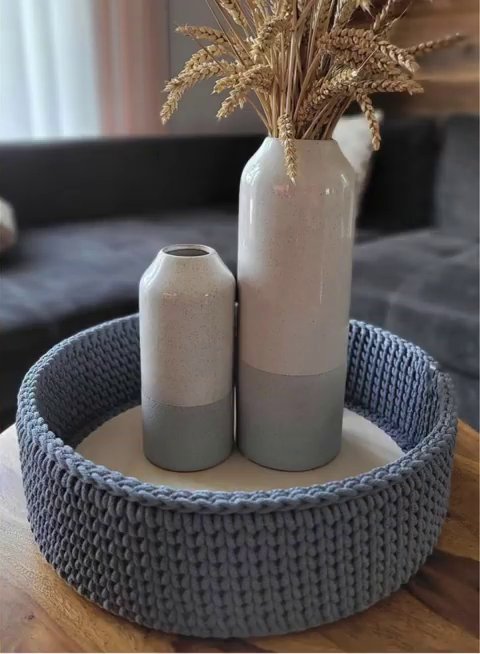
The second thing is color. This is where a lot of home decor crochet either shines or falls flat. People often use too many colors, or colors that clash, because they’re excited and want to use every skein they own. But the pieces that actually look beautiful and expensive almost always stick to a simple color story. Think cream, tan, soft brown, maybe one deeper accent color like rust or forest green. That’s it. When your colors are limited but intentional, your project instantly looks more put together — like something designed on purpose instead of just thrown together.
For a deeper look at how your hands and materials work together, check out this guide on holding your crochet hook and yarn for perfect tension. Tension control is one of those small skills that makes a massive difference in the final look of any project.
The Best Crochet Home Decor Ideas That Are Actually Worth Your Time
Now let’s get into the fun part — the actual projects. Because this is where crochet home decor really gets exciting.
Blankets: The Gateway Piece
Blankets are the entry point for so many people, and for good reason. But we’re not talking about just any blanket. We’re talking about the kind that becomes the centerpiece of a room — a big, chunky, oversized throw in a soft neutral color, draped over the corner of a couch or folded at the end of a bed. These blankets use simple stitches, nothing complicated. The size and the yarn thickness are what make them feel luxurious.
Here’s a tip that takes almost no extra effort: add fringe or tassels to the ends. It’s such a small detail, but it completely changes the look. Suddenly your blanket goes from “I made this” to “where did you buy that?”
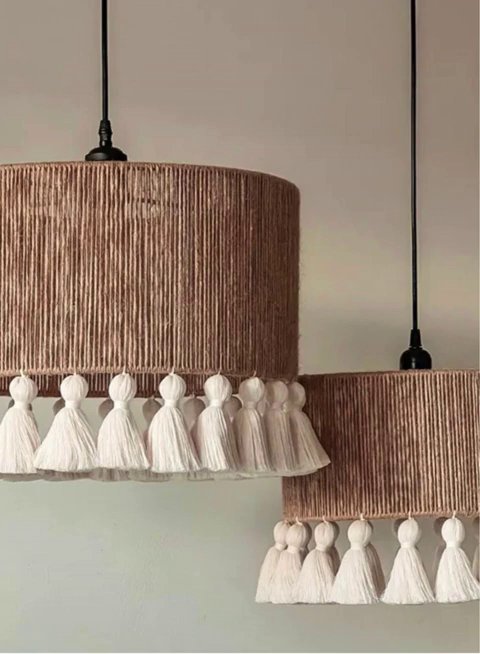
Wall Hangings: Fiber Art for Empty Walls
Crochet wall hangings — sometimes called fiber art — have taken over interior design in the last couple of years. They’re basically macrame’s softer, more textured cousin. Instead of just knots, you’re working with actual stitches to create texture, waves, fringes, and shapes that hang beautifully on a blank wall.
Most of these pieces use a wooden dowel or a natural branch at the top, with the crochet work flowing down like a waterfall of texture. The most beautiful ones stick to that same neutral palette: cream and beige mostly, with maybe a hint of brown or gray. Hang one above a bed or a couch, and it instantly makes the space feel warmer and more intentional.
Plant Hangers: The Perfect Beginner Project
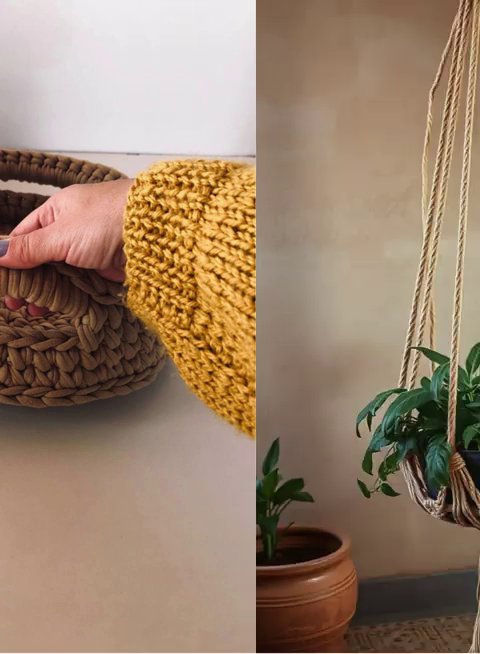
If you’re just starting out with crochet home decor, plant hangers might be the easiest way to bring it into your home. A simple crochet plant hanger takes basic stitches, a bit of cotton cord, and turns into this beautiful holder for your favorite plant. The beauty of these is that they work with pretty much any style — boho, modern, cottagecore, it doesn’t matter. A plant hanging in a crochet net just looks good everywhere. Plus, they’re a quick project, so you don’t have to commit to something huge like a blanket.
Baskets: Underrated and Incredibly Useful
Crochet baskets made from thick cotton rope or t-shirt yarn are seriously underrated. They’re not just cute — they’re actually useful. You can use them to hold blankets, magazines, toys, plants, literally anything. Because they’re made with a stiffer material, they hold their shape really well, which makes them look neat and structured instead of floppy.
A lot of people make these in a chunky off-white color and let the texture do all the talking. The simplest single crochet stitch worked in a spiral creates the most satisfying-looking basket. No need for fancy patterns.
Coasters and Table Runners: Small Details, Big Impact
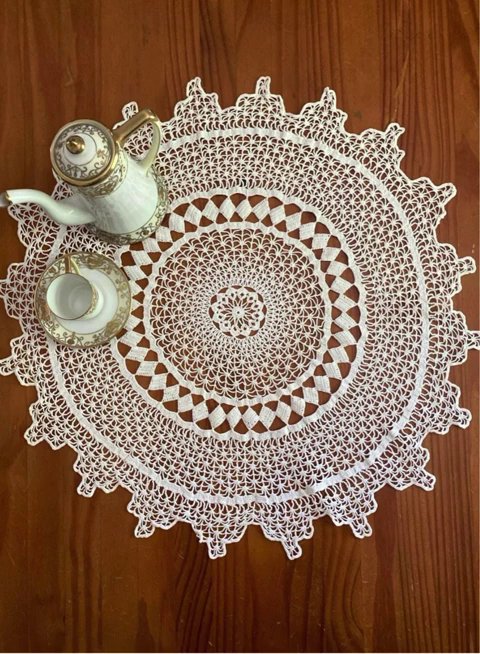
Coasters and table runners are another area where crochet really shines, especially if you like the idea of adding little details without committing to a huge project. A set of crochet coasters in a soft neutral color can completely change the look of a coffee table. A crochet table runner with a bit of texture — like a shell stitch or a simple lace pattern — makes a dining table feel so much more put together. It’s the kind of detail that makes people think you spent a lot more time and money than you actually did.
The Big Projects: Curtains, Lampshades, and Rugs
Then there are the bigger projects — the ones that really show off what crochet can do. Things like crochet curtains, crochet lampshade covers, even crochet rugs. These take more time, more yarn, and definitely more patience, but the payoff is huge.
Imagine walking into a room where the curtains are soft, textured crochet panels instead of plain fabric, letting little bits of light filter through the stitches. Or a lamp with a crochet shade that casts soft, cozy shadows on the wall at night. These are the kind of pieces that make people stop and ask, “Wait, did you actually make that?”
If you’re new to working in the round — which you’ll need for baskets, hats, or circular rugs — this tutorial on starting with a magic ring for amigurumi will give you a clean, tight center that doesn’t leave a hole.
The Secret Nobody Tells You
Here’s where it all comes together, and it connects right back to that flea market blanket. The most beautiful crochet home decor pieces — the ones that actually look like they belong in a designer home — are not the most complicated ones. They’re not packed with fancy stitches or a hundred different colors. It’s actually the opposite.
The simplest projects, made with good yarn, a limited color palette, and just a little attention to detail, are the ones that look the most expensive and put together. That’s the secret that so many people miss. They think they need to learn complex patterns or master advanced techniques. But really, what matters is choosing the right materials and keeping your vision focused.
So the next time you pick up your hook, don’t worry about being perfect. Worry about being intentional. Pick one or two colors that work together. Choose a yarn that suits your project. Keep your stitches consistent. Add a small detail like fringe or a wooden dowel. And trust that the slight imperfections — the uneven edges, the slightly wonky rows — are exactly what make it look like something a real person made with their own hands.
That’s not a flaw. That’s the whole point.